Speaking up can protect a boundary, correct misinformation, name a need, or bring a hidden conflict into the open. It can also be frightening when another person has power, when emotions are high, or when the outcome cannot be controlled. This six-card spread helps you clarify the purpose, timing, and delivery of the conversation.
The goal of speaking up is not always to make someone agree. It may be to state the truth clearly enough that your next choice becomes possible.
The Spread at a Glance
- What Needs to Be Said — This card clarifies the truth, request, correction, feeling, or limit at the heart of the conversation.
- The Cost of Staying Silent — Silence may preserve short-term peace while creating resentment, confusion, repeated harm, lost opportunity, or disconnection from yourself.
- The Risk of Speaking — Name the possible conflict, vulnerability, consequence, misunderstanding, or power response so you can prepare responsibly.
- The Right Timing — This position may recommend prompt action, emotional cooling, privacy, documentation, a deadline, or waiting until support is present.
- How to Deliver the Message — The card can suggest directness, brevity, evidence, compassion, firmness, curiosity, or a written format that reduces confusion.
- The Boundary Afterward — Decide what action follows if the message is respected, dismissed, or punished.
Before You Shuffle
Write the central message in one sentence. Ask: “What do I need to understand before I speak up?” Consider power differences and safety. In workplaces, legal matters, or abusive dynamics, document facts and seek appropriate support.
How to Lay Out the Cards
Create two rows of three cards. The top row shows what needs expression, the cost of silence, and the risk of speaking. The lower row identifies timing, delivery, and the boundary or action needed after the conversation.
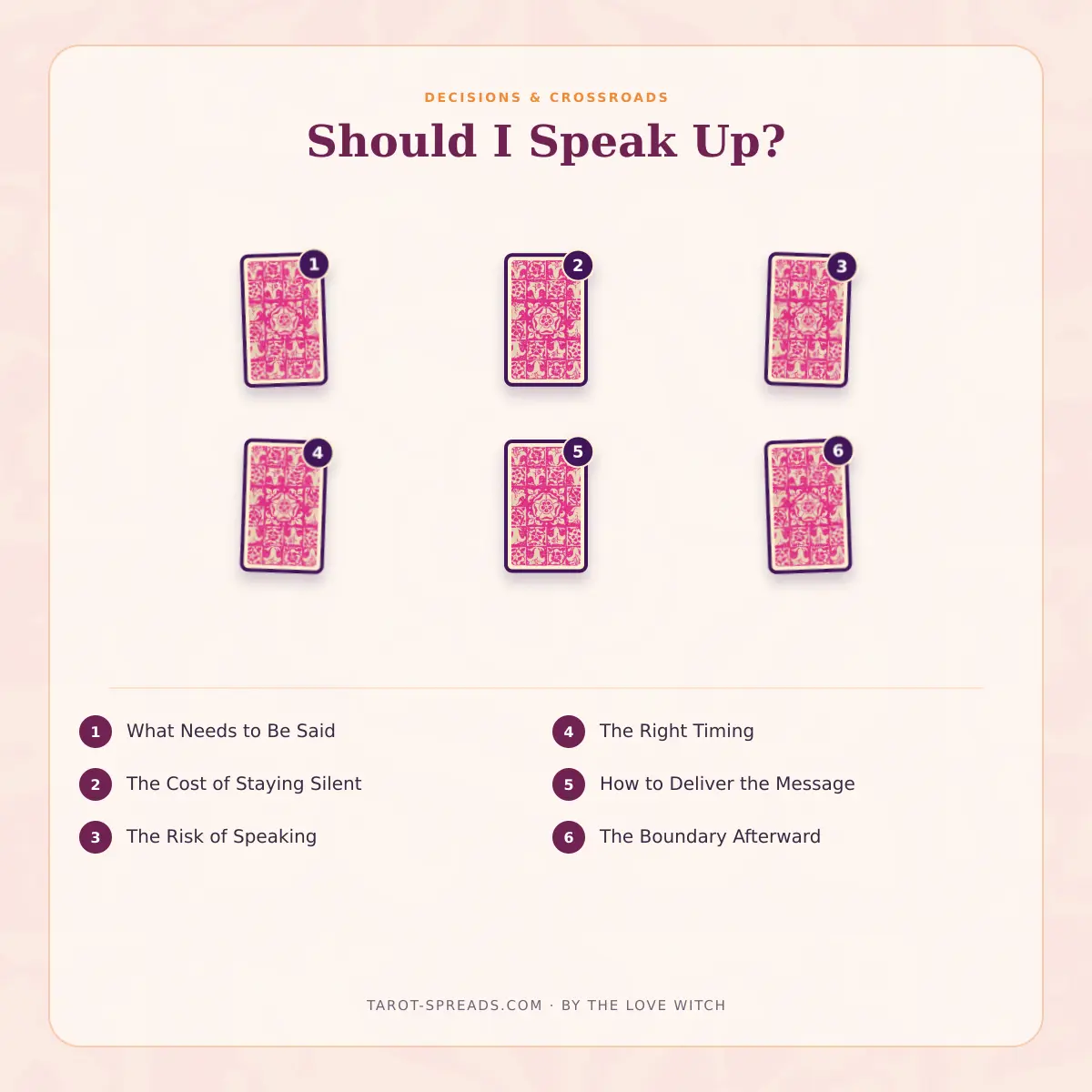
Card 1: What Needs to Be Said
This card clarifies the truth, request, correction, feeling, or limit at the heart of the conversation.
Card 2: The Cost of Staying Silent
Silence may preserve short-term peace while creating resentment, confusion, repeated harm, lost opportunity, or disconnection from yourself.
Card 3: The Risk of Speaking
Name the possible conflict, vulnerability, consequence, misunderstanding, or power response so you can prepare responsibly.
Card 4: The Right Timing
This position may recommend prompt action, emotional cooling, privacy, documentation, a deadline, or waiting until support is present.
Card 5: How to Deliver the Message
The card can suggest directness, brevity, evidence, compassion, firmness, curiosity, or a written format that reduces confusion.
Card 6: The Boundary Afterward
Decide what action follows if the message is respected, dismissed, or punished. A boundary turns expression into self-protection and choice.
How to Read the Story
Cards two and three compare the consequences of silence and speech; neither path is assumed to be painless. Cards four and five make the communication more effective, while card six ensures the conversation is not your only source of power. You can control clarity and follow-through even when you cannot control the response.
Questions This Spread Can Help With
- What is the essential message?
- What will silence cost me?
- What consequence should I prepare for?
- When and where should I speak?
- What boundary will I uphold afterward?
A Grounding Reminder
Your voice matters even when the other person does not welcome it. Speak as safely and clearly as the situation allows, then let your actions support what you have said.
Related Tarot Spreads
- Should I Say Yes or No? Tarot Spread
- Stay or Go Tarot Spread
- Explore more Decisions & Crossroads tarot spreads
Keep this reading close
Email Me This Spread
Get this exact spread in your inbox, plus a discount code for a private reading.