The phrase self-sabotage can make a protective behavior sound like an enemy. Procrastination, avoidance, perfectionism, overcommitting, or withdrawing may create real consequences, but they often began as attempts to prevent shame, rejection, overwhelm, or loss of control. This spread looks for function before asking for change.
A pattern becomes easier to change when you understand the job it has been trying to do.
The Spread at a Glance
- The Pattern I Can Observe — Describe what you actually do or avoid doing, without turning the behavior into a character judgment.
- What Activates the Pattern — Identify the emotion, task, relationship, level of uncertainty, or expectation that tends to come first.
- What It Is Trying to Protect — Explore the feared consequence or unmet need beneath the behavior, such as safety, control, rest, belonging, or protection from shame.
- The Cost of Keeping It Unchanged — Notice the impact on time, trust, health, opportunity, money, relationships, or self-respect.
- A More Supportive Response — Choose a replacement behavior that addresses the need while reducing the cost.
- What Will Help Me Practice — Look for structure, accountability, compassion, skill-building, environmental change, or professional support.
Before You Shuffle
Choose one observable pattern and one recent example. Ask: “What is this behavior protecting, and what alternative would meet the need more effectively?” Avoid labeling your whole identity as self-sabotaging.
How to Lay Out the Cards
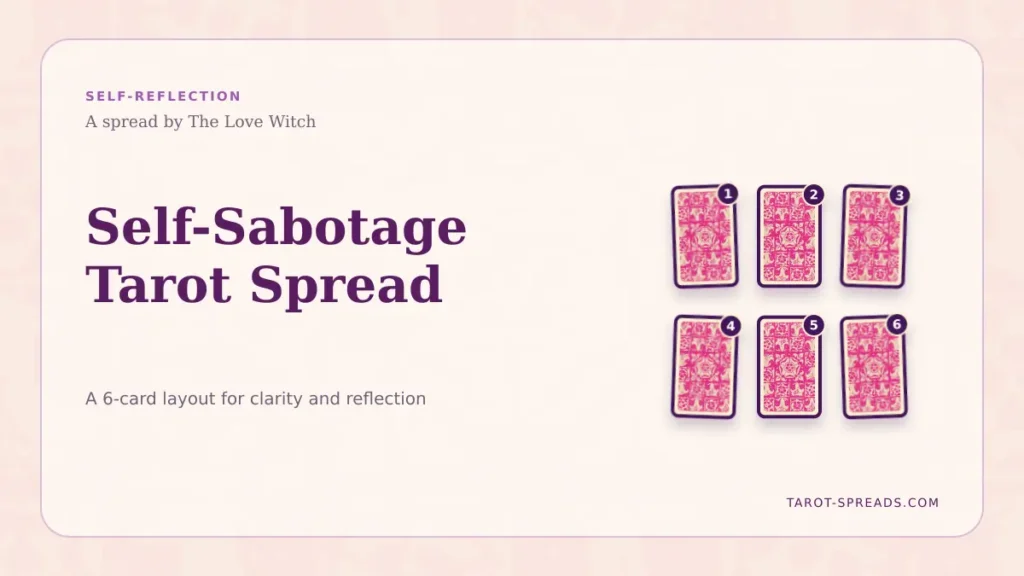
Create two rows of three cards. The top row shows the behavior, trigger, and protective purpose. The bottom row reveals the cost, a more supportive response, and the resource that helps you practice it.
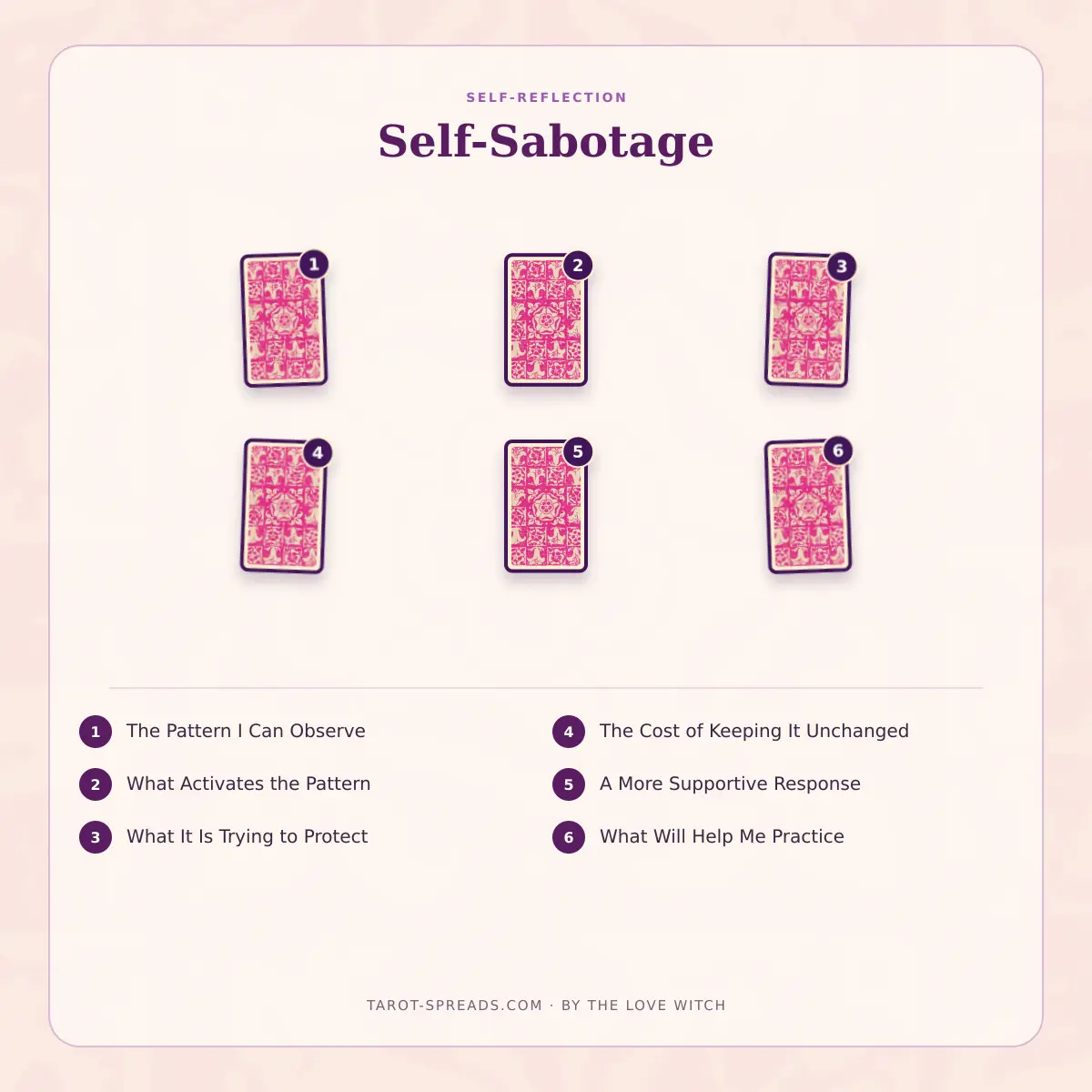
Card 1: The Pattern I Can Observe
Describe what you actually do or avoid doing, without turning the behavior into a character judgment.
Card 2: What Activates the Pattern
Identify the emotion, task, relationship, level of uncertainty, or expectation that tends to come first.
Card 3: What It Is Trying to Protect
Explore the feared consequence or unmet need beneath the behavior, such as safety, control, rest, belonging, or protection from shame.
Card 4: The Cost of Keeping It Unchanged
Notice the impact on time, trust, health, opportunity, money, relationships, or self-respect.
Card 5: A More Supportive Response
Choose a replacement behavior that addresses the need while reducing the cost.
Card 6: What Will Help Me Practice
Look for structure, accountability, compassion, skill-building, environmental change, or professional support.
How to Read the Story
Cards one through three turn accusation into useful information. Card four keeps compassion from becoming avoidance of consequences. Cards five and six focus on replacement and support, because removing a coping pattern without meeting its need rarely creates lasting change.
Questions This Spread Can Help With
- What behavior keeps repeating?
- What happens immediately before it?
- What is the pattern trying to prevent?
- What need deserves a better response?
- What support would make change easier?
A Grounding Reminder
Understanding a pattern does not excuse harm, but shame is rarely an effective long-term strategy. Change can include accountability and compassion at the same time.
Related Tarot Spreads
Keep this reading close
Email Me This Spread
Get this exact spread in your inbox, plus a discount code for a private reading.