Workplace conflict can affect income, reputation, confidence, and the sense of safety you need to do your job. It is especially difficult when power is uneven or the disagreement is expressed indirectly. This six-card spread helps separate observable facts from emotional interpretations and identify a response that is both clear and professionally protective.
Tarot may help you prepare your response, but documentation, policy, and qualified workplace or legal advice should guide high-stakes action.
The Spread at a Glance
- What Is Factually Happening — Begin with behavior, decisions, communication, workload, and events that can be documented.
- The Underlying Tension — This card may reveal unclear authority, competition, incompatible expectations, poor communication, resource scarcity, bias, or accumulated resentment.
- What I Contribute to the Dynamic — Identify your communication style, assumption, boundary, strength, or reaction without accepting responsibility for conduct that is not yours.
- The Communication Needed — Clarify the message, question, correction, or request that could reduce ambiguity and establish a professional record.
- The Support to Use — This may be a manager, colleague, mentor, policy, union, human-resources process, documentation, or external professional advice.
- The Boundary or Next Action — End with what protects your work and wellbeing: limiting contact, formal escalation, a written follow-up, clearer scope, mediation, or planning an exit.
Before You Shuffle
Write down what happened, who was present, and what can be verified. Ask: “What do I need to understand about this workplace conflict and how should I respond?” Avoid using cards as proof of another person’s motive.
How to Lay Out the Cards
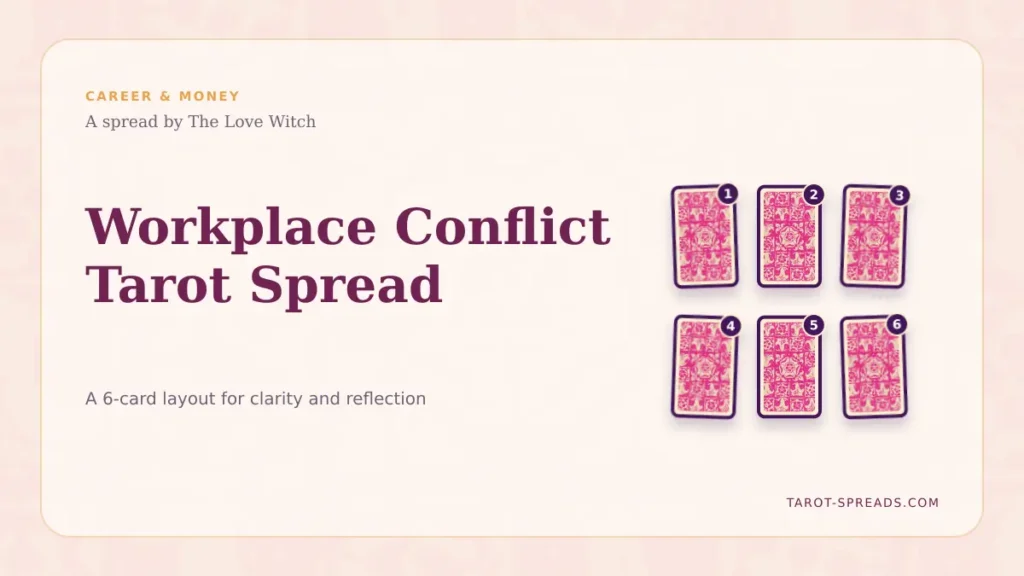
Create two rows of three cards. The top row shows the facts, underlying tension, and your contribution. The lower row identifies communication, support, and the boundary or next action.
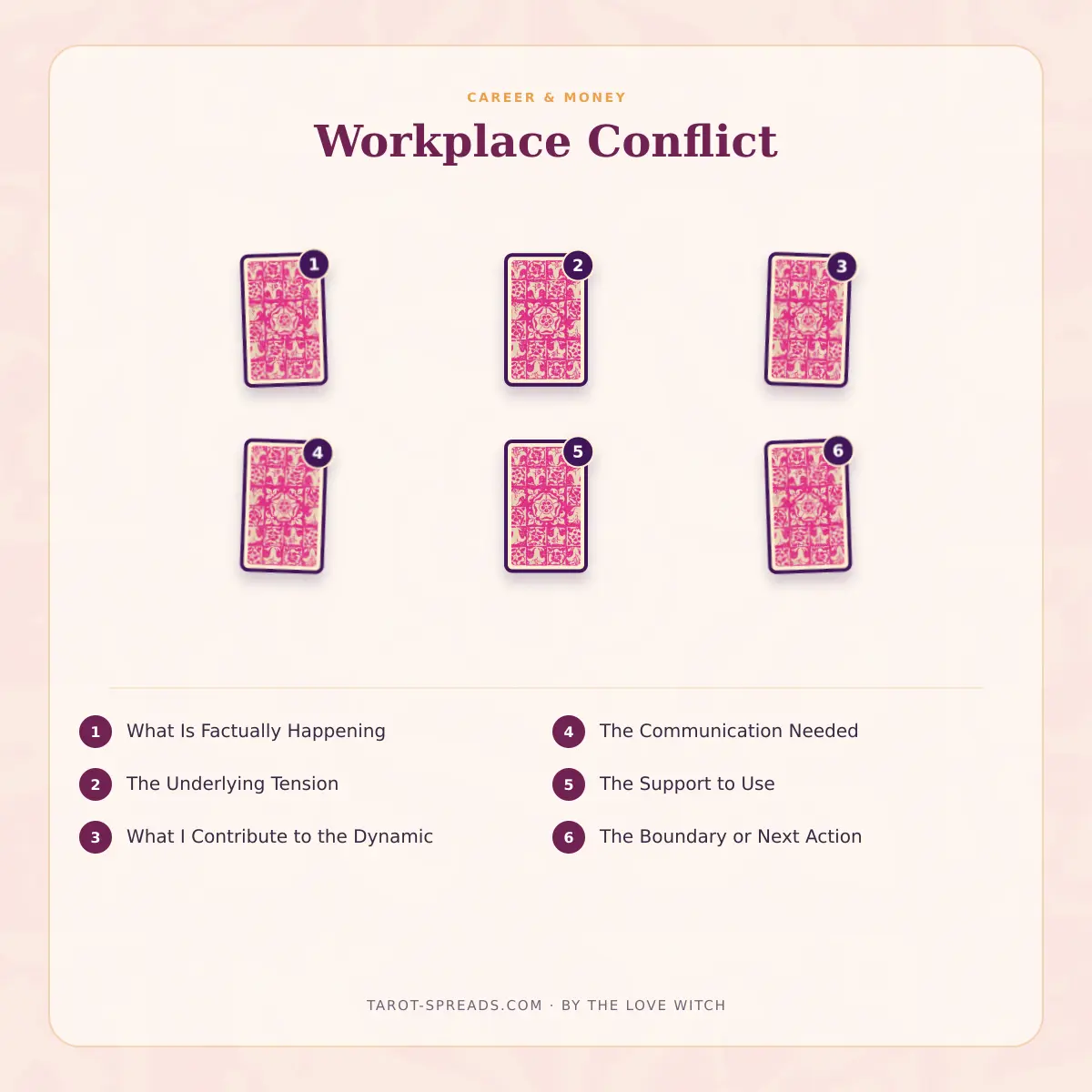
Card 1: What Is Factually Happening
Begin with behavior, decisions, communication, workload, and events that can be documented.
Card 2: The Underlying Tension
This card may reveal unclear authority, competition, incompatible expectations, poor communication, resource scarcity, bias, or accumulated resentment.
Card 3: What I Contribute to the Dynamic
Identify your communication style, assumption, boundary, strength, or reaction without accepting responsibility for conduct that is not yours.
Card 4: The Communication Needed
Clarify the message, question, correction, or request that could reduce ambiguity and establish a professional record.
Card 5: The Support to Use
This may be a manager, colleague, mentor, policy, union, human-resources process, documentation, or external professional advice.
Card 6: The Boundary or Next Action
End with what protects your work and wellbeing: limiting contact, formal escalation, a written follow-up, clearer scope, mediation, or planning an exit.
How to Read the Story
Card one anchors the reading in evidence. Compare it with card two so interpretation does not replace documentation. Card three can improve your response without becoming misplaced blame. Cards four through six create a sequence: communicate, use support, and follow through with an appropriate boundary.
Questions This Spread Can Help With
- What facts should I document?
- What structural issue may be feeding the conflict?
- How can I communicate more effectively?
- Who or what can support me?
- What action protects my position?
A Grounding Reminder
Professionalism does not require tolerating repeated harm or staying silent about a problem that affects your work. Clarity and documentation are forms of protection.
Related Tarot Spreads
Keep this reading close
Email Me This Spread
Get this exact spread in your inbox, plus a discount code for a private reading.