A boundary defines what you will do to protect your time, body, energy, values, or access. It is not a punishment and it cannot guarantee another person’s agreement. This six-card spread helps you identify where strain has developed and formulate a limit you can realistically uphold.
A clear boundary describes your participation. It does not require you to win a case for why your limit should matter.
The Spread at a Glance
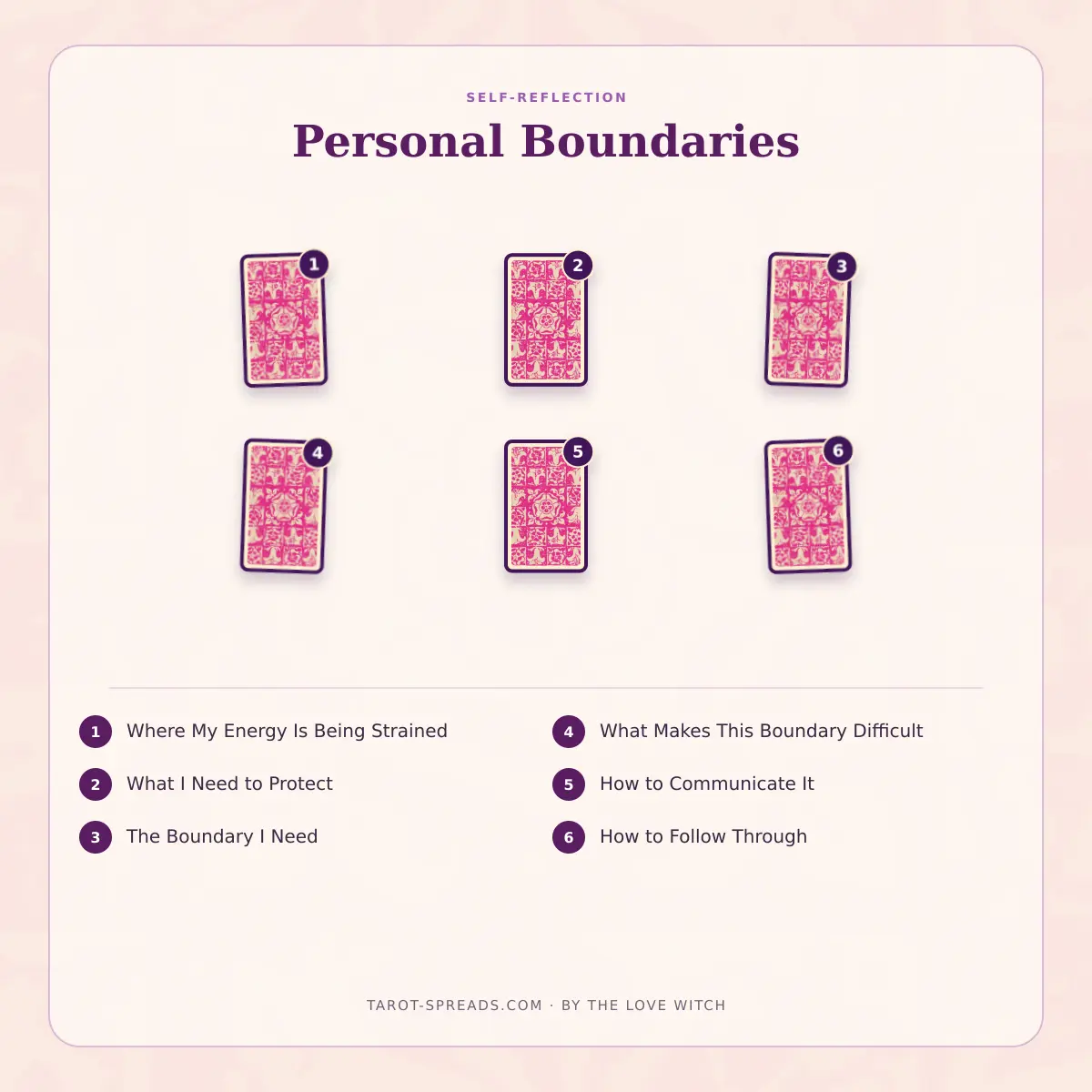
- Where My Energy Is Being Strained — Identify the repeated interaction, demand, access, responsibility, or ambiguity that is creating resentment or depletion.
- What I Need to Protect — Clarify the time, safety, privacy, dignity, rest, focus, value, or emotional capacity at the center of the issue.
- The Boundary I Need — Describe the limit in behavioral terms: what you will allow, decline, leave, pause, or require before participating.
- What Makes This Boundary Difficult — Explore guilt, fear of conflict, dependence, habit, cultural expectations, or uncertainty about your right to say no.
- How to Communicate It — Choose language and timing that are direct, proportionate, and focused on your own actions.
- How to Follow Through — This card shows the consequence, support, repetition, distance, or practical preparation needed to make the boundary real.
Before You Shuffle
Choose one relationship or situation. Ask: “What boundary would support my well-being, and how can I practice it responsibly?” If there is abuse, coercion, stalking, or danger, prioritize a safety plan and specialist support over direct confrontation.
How to Lay Out the Cards
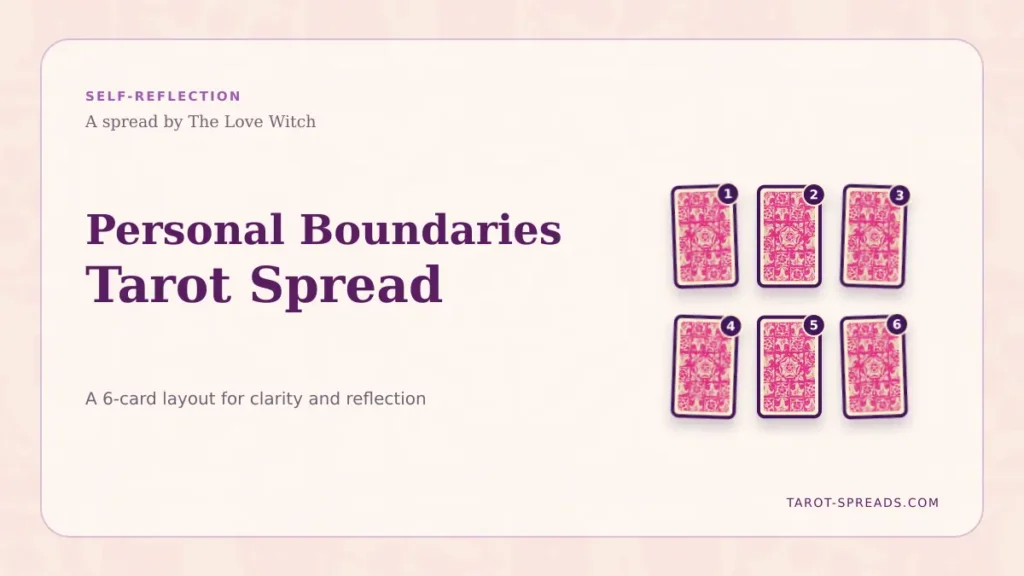
Create two rows of three cards. The top row shows the strain, the value or need being protected, and the boundary itself. The bottom row identifies fear, communication, and follow-through.
Card 1: Where My Energy Is Being Strained
Identify the repeated interaction, demand, access, responsibility, or ambiguity that is creating resentment or depletion.
Card 2: What I Need to Protect
Clarify the time, safety, privacy, dignity, rest, focus, value, or emotional capacity at the center of the issue.
Card 3: The Boundary I Need
Describe the limit in behavioral terms: what you will allow, decline, leave, pause, or require before participating.
Card 4: What Makes This Boundary Difficult
Explore guilt, fear of conflict, dependence, habit, cultural expectations, or uncertainty about your right to say no.
Card 5: How to Communicate It
Choose language and timing that are direct, proportionate, and focused on your own actions.
Card 6: How to Follow Through
This card shows the consequence, support, repetition, distance, or practical preparation needed to make the boundary real.
How to Read the Story
Cards one through three move from symptom to protected need to specific limit. Card four deserves compassion, but it does not cancel card three. Card five addresses communication, while card six distinguishes a stated preference from an enforceable boundary.
Questions This Spread Can Help With
- Where am I becoming resentful or depleted?
- What value or need needs protection?
- What is within my control?
- How can I state the limit simply?
- What follow-through can I sustain?
A Grounding Reminder
You are allowed to make choices about your participation. In unsafe situations, the wisest boundary may be distance, documentation, or confidential help rather than a face-to-face conversation.
Related Tarot Spreads
- Trust Your Intuition Tarot Spread
- Fear and Courage Tarot Spread
- Explore more Self-Reflection tarot spreads
Keep this reading close
Email Me This Spread
Get this exact spread in your inbox, plus a discount code for a private reading.