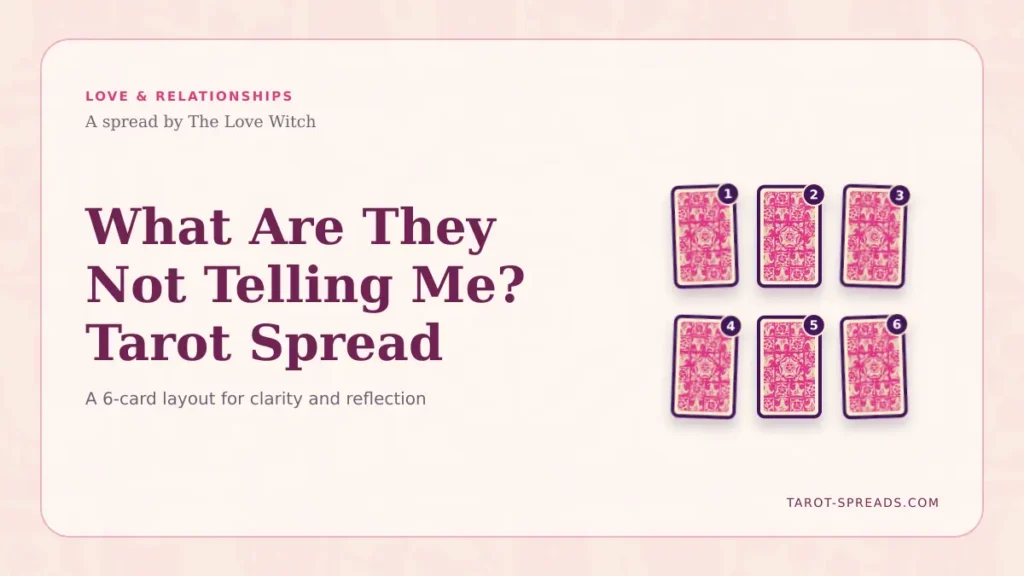
When behavior and words do not seem to match, uncertainty can turn into suspicion. Tarot is most helpful here when it distinguishes what is visible, what may be unspoken, and what you are filling in yourself. This six-card spread is designed for discernment and communication, not for accusing someone based on a card.
An unspoken feeling, fear, or conflict is not the same as a proven secret. Let tarot shape a question, not manufacture evidence.
The Spread at a Glance
- What Is Clearly Visible — Begin with facts, behavior, and words you can verify.
- What Feels Inconsistent — Identify the gap that created concern: changing communication, vague plans, emotional distance, conflicting statements, or an intuition that something has shifted.
- What May Be Unspoken — This card can describe a feeling, fear, need, conflict, or circumstance that has not been expressed.
- What I May Be Assuming — Notice where past hurt, anxiety, idealization, or incomplete information is shaping the story.
- The Conversation We Need — Turn the reading into a clear, non-accusatory question or observation.
- The Boundary That Protects Clarity — Decide what you will do if communication remains evasive.
Before You Shuffle
Write down the specific behavior that concerns you. Ask: “What do I need to understand about the unspoken dynamics in this situation?” If you have evidence of deception, address the evidence directly. If you do not, remain open to explanations that are less dramatic than your fear.
How to Lay Out the Cards
Create two rows of three cards. The first row shows what is visible, what feels inconsistent, and what may remain unspoken. The second row reveals your assumption, the conversation needed, and the boundary or action that restores clarity.
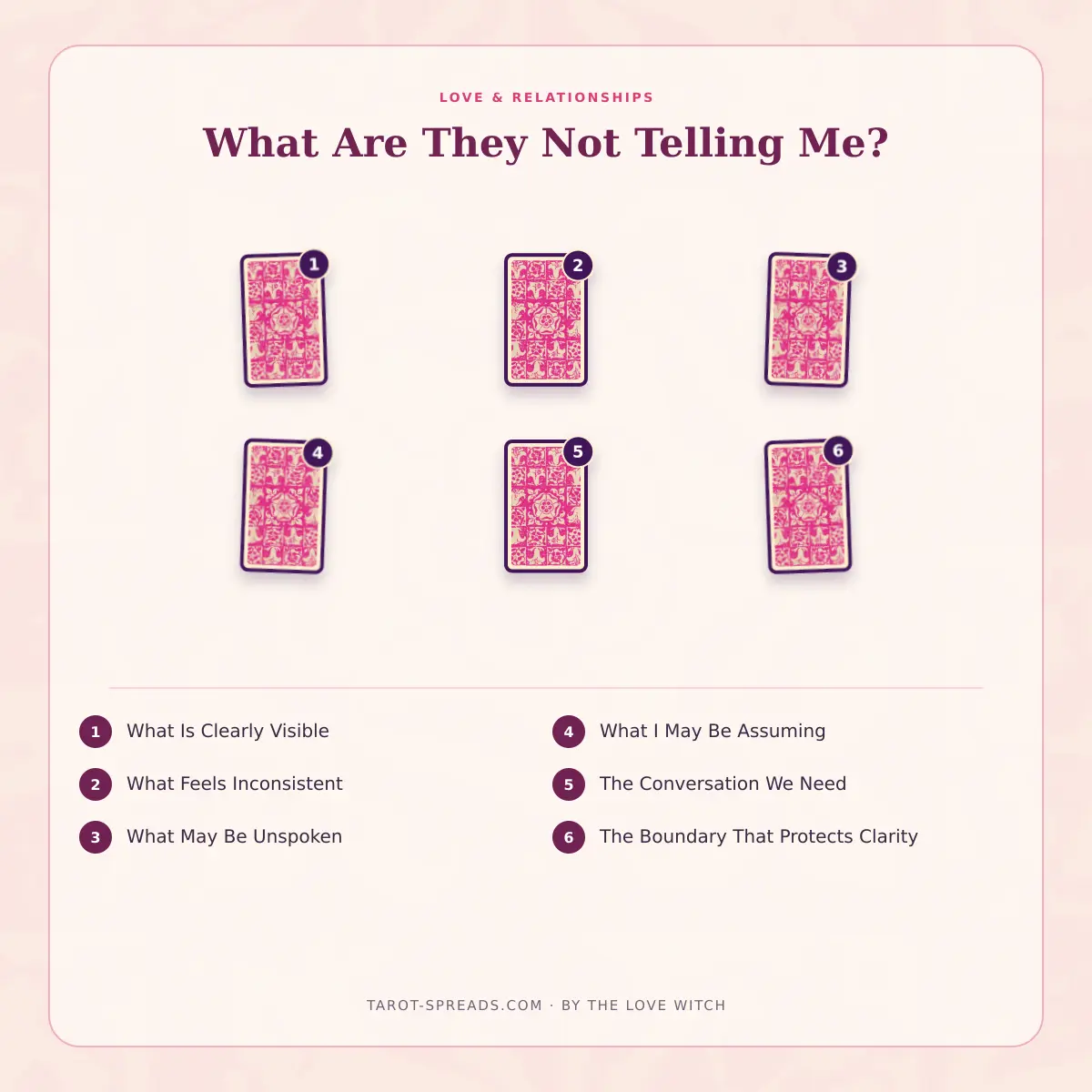
Card 1: What Is Clearly Visible
Begin with facts, behavior, and words you can verify. This anchors the reading before interpretation introduces possibilities.
Card 2: What Feels Inconsistent
Identify the gap that created concern: changing communication, vague plans, emotional distance, conflicting statements, or an intuition that something has shifted.
Card 3: What May Be Unspoken
This card can describe a feeling, fear, need, conflict, or circumstance that has not been expressed. Hold it as a hypothesis rather than proof.
Card 4: What I May Be Assuming
Notice where past hurt, anxiety, idealization, or incomplete information is shaping the story. Your concern may be valid while some details remain imagined.
Card 5: The Conversation We Need
Turn the reading into a clear, non-accusatory question or observation. This card may call for directness, timing, listening, emotional honesty, or a request for specific information.
Card 6: The Boundary That Protects Clarity
Decide what you will do if communication remains evasive. A boundary may involve slowing investment, requiring consistency, taking space, or acting on the information already available.
How to Read the Story
Cards one and two establish the evidence. Compare card three with card four so the unspoken possibility does not become indistinguishable from your assumption. Card five should produce a real question that allows the other person to respond, and card six protects you if clarity is not offered.
Questions This Spread Can Help With
- What facts am I overlooking?
- What behavior is creating mistrust?
- What may be difficult for them to express?
- Am I filling uncertainty with an old fear?
- What question or boundary would create clarity?
A Grounding Reminder
You do not need supernatural proof to take inconsistency seriously. You also do not need to turn uncertainty into certainty before having an honest conversation.
Related Tarot Spreads
- How Can I Heal After This Breakup? Tarot Spread
- Why Did They Ghost Me? Tarot Spread
- Explore more Love & Relationships tarot spreads
Keep this reading close
Email Me This Spread
Get this exact spread in your inbox, plus a discount code for a private reading.